Bernina Express · Tirano to St Moritz
A Red Train Over the Alps, on Grip Alone
The Bernina line climbs from palm-lined Tirano to a glacier pass at 2,253 metres and down to St Moritz — the highest railway crossing of the Alps, and one of the steepest that runs on plain wheel-to-rail adhesion, no cogwheel. It's a UNESCO World Heritage railway, and from Milan it makes a long, spectacular day. Here's how to do it.
The Alps, climbed without a cog
The Alps, climbed without a cog
A feat of plain grip
Most railways that climb high mountains cheat gravity with a rack — a toothed rail the train grips like a cog. The Bernina line doesn't. It crests the Alps at 2,253 metres and holds gradients up to seven percent on plain wheel-to-rail adhesion, making it the highest transalpine railway crossing and one of the steepest adhesion railways in the world. That engineering nerve — climbing the Alps on grip alone — is why the line, opened in 1910, still feels audacious, and part of why UNESCO listed it.
A World Heritage railway
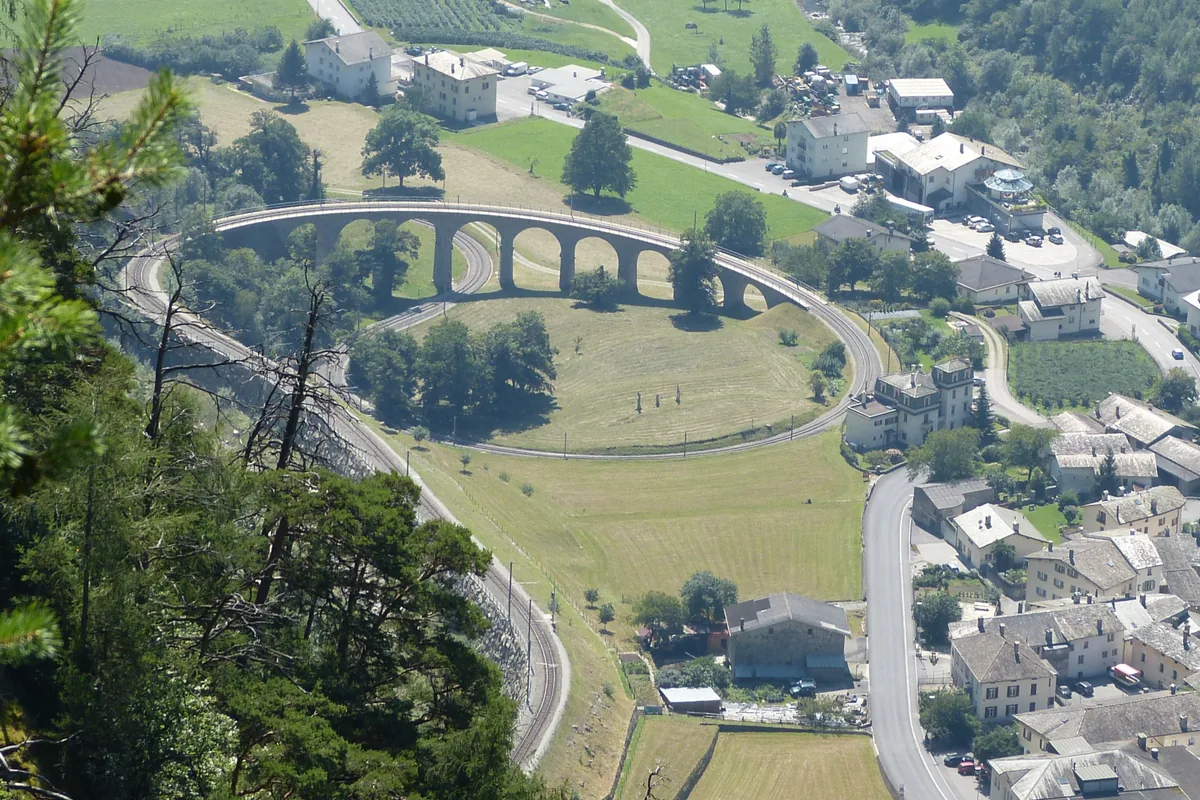
In 2008 UNESCO inscribed the Rhaetian Railway's Albula and Bernina lines as a World Heritage Site — recognition not of scenery alone but of how boldly the railway was built into an unforgiving landscape. The Bernina Express journey crosses, by the railway's own count, 196 bridges and threads 55 tunnels, including the open 360-degree spiral of the Brusio viaduct, a stone loop built in 1908 purely to tame the gradient where the valley fell away too steeply.
Glaciers to palm trees
The line's signature is its sheer range. In a single ride it drops from the ice of the Bernina Pass — past the Morteratsch and Palü glaciers and the turquoise, glacier-fed Lago Bianco — down through the Italian-speaking Val Poschiavo to palm-dotted, Mediterranean-flavoured Tirano, falling from roughly 2,300 metres to 550 in about 25 kilometres. Glaciers to palm trees, in one afternoon, through the panoramic windows of a slow red train.
The climb
Tirano to St Moritz, over the pass
Nearly 1,800 metres of height gained on grip alone — no rack, no cogwheel — then the descent into the Engadine.
How the day runs
The Milan day trip reaches the Swiss line from the Italian side and rides it over the pass. Here's the shape of a long, rewarding day.
- 01
Milan up to Tirano
An early start from Milan — often around 7 a.m. — and a coach north through the Italian Lakes and up the Valtellina valley to Tirano, the Italian rail town where the red train waits. A photo or coffee stop with Lake Como views is common on the road leg. It's a couple of hours of driving to reach the start of the scenery, so this is a day that begins before dawn feels finished.
- 02
Board the Bernina Express
At Tirano you cross a single square from Italy's railway to Switzerland's and board the panoramic Bernina Express, with its enlarged windows curving up into the roof. Almost at once the line starts to climb — through the Brusio spiral, up the Val Poschiavo, gaining nearly 1,800 metres of height on the way to the pass. Your reserved seat is part of the packaged tour; on the branded train it's mandatory and separate.
- 03
Over the pass to St Moritz
The train crests the Bernina Pass at Ospizio Bernina, 2,253 metres, beside the turquoise Lago Bianco on the continental watershed, with the Morteratsch and Palü glaciers in view and the celebrated Alp Grüm terrace looking down the valley. Then it descends into the Engadine to St Moritz — the glamorous alpine resort where winter tourism was born and the Winter Olympics were held twice.
- 04
St Moritz, then home
Free time in St Moritz — lakeside, at around 1,850 metres in the Upper Engadine — to eat and wander, before the return leg to Milan. Depending on the package and availability, the train and coach legs may be reversed. Either way you're back in Milan in the evening, having crossed the Alps and back in a single, long, memorable day.
What passes the window
What passes the window
The Bernina line strings together a sequence of set-pieces between Tirano and St Moritz. Here's what to watch for.
The spiral viaduct
Just above Tirano the line loops a full 360 degrees over its own tracks on a nine-arch stone viaduct, built in 1908 to hold the gradient where the valley dropped too fast for a straight climb. It's one of the most photographed pieces of railway in the Alps, and the train's first flourish — a graceful, open-air corkscrew rather than a hidden tunnel.
The watershed lake
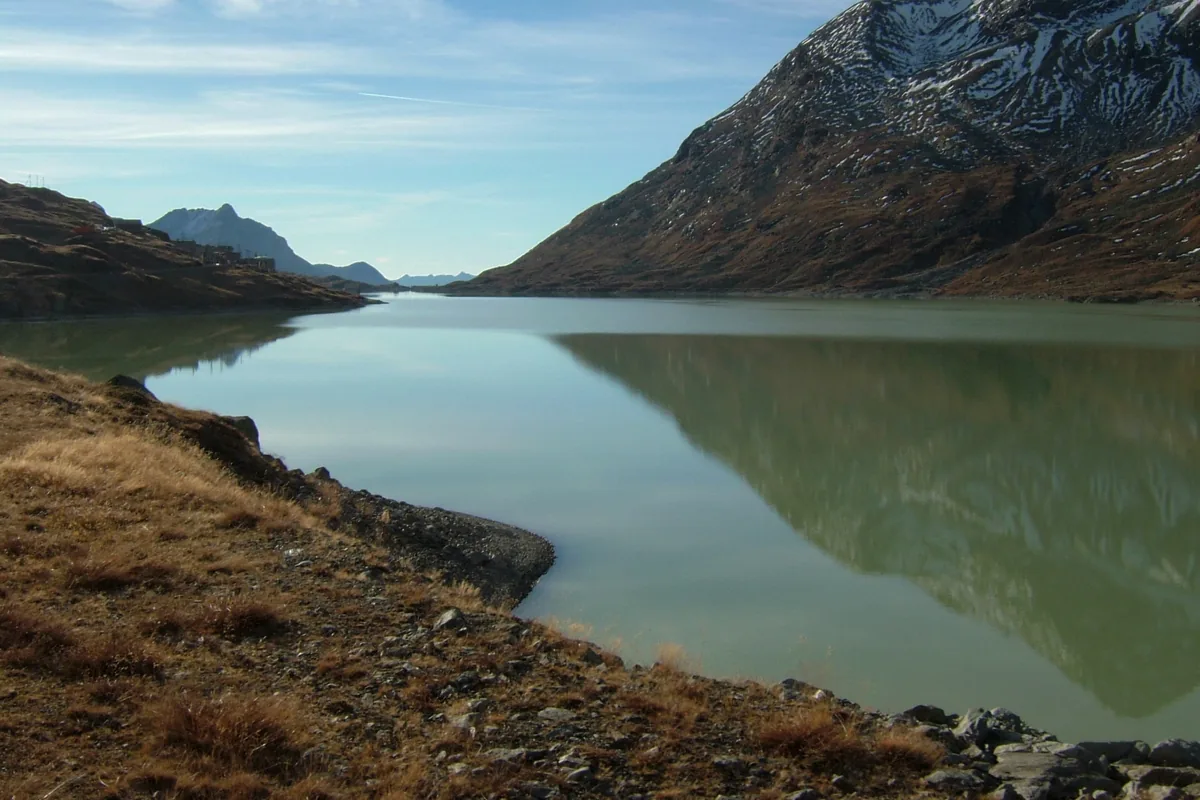
At the pass lies Lago Bianco, a turquoise, glacier-fed reservoir beside the summit station, sitting on the continental divide: water on one side drains to the Adriatic, on the other to the Black Sea. Its intense milky-blue colour comes from glacial rock flour, and it's the visual high point of the crossing, framed by peaks.
Morteratsch and Palü
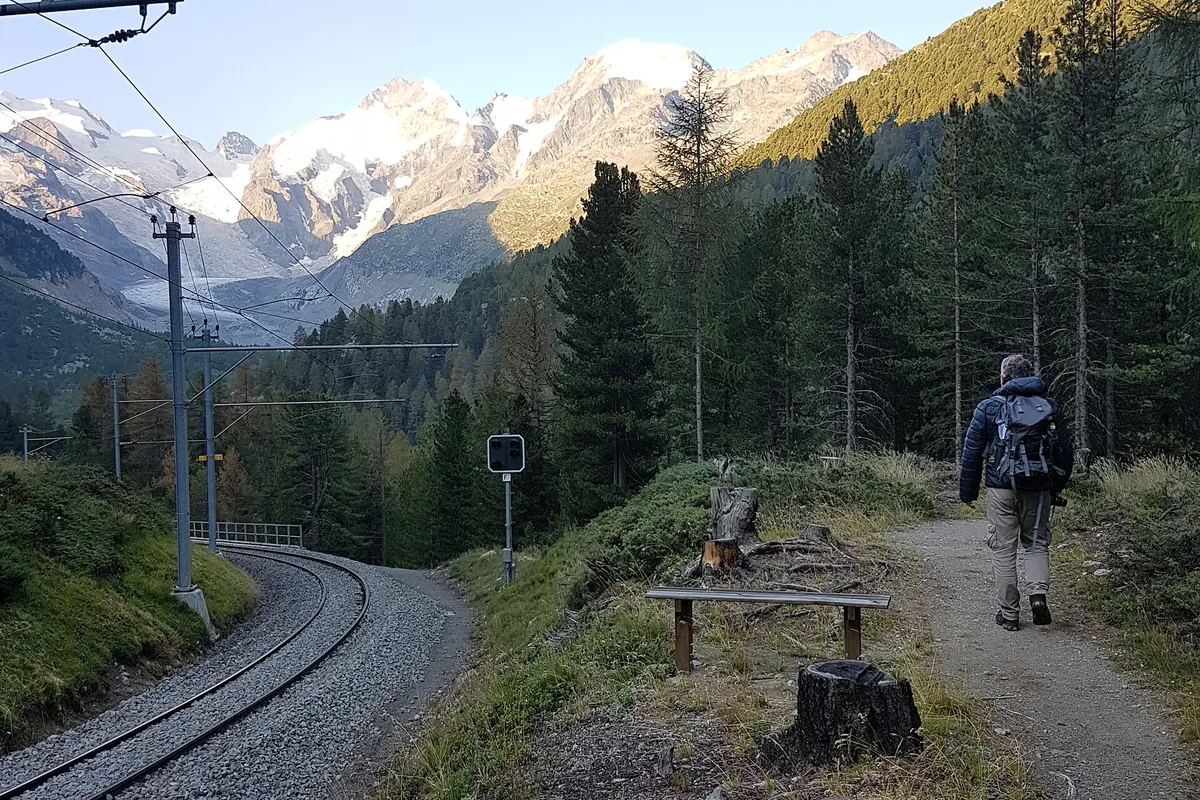
On the climb the line runs within sight of the Morteratsch glacier — one of the most accessible large glaciers in the Alps — and, from the celebrated Alp Grüm terrace at 2,091 metres, looks directly onto the Palü glacier and down the Val Poschiavo. These are the views that fog can steal, and that a clear day makes unforgettable.
The Italian-Swiss valley
Below the pass the line drops through the Val Poschiavo, an Italian-speaking Swiss valley of stone villages, terraced fields and the long Lago di Poschiavo, before reaching the border. This is the 'palm trees' end of the ride: within 25 kilometres the landscape falls from alpine ice to an almost Mediterranean warmth.
Where winter holidays began
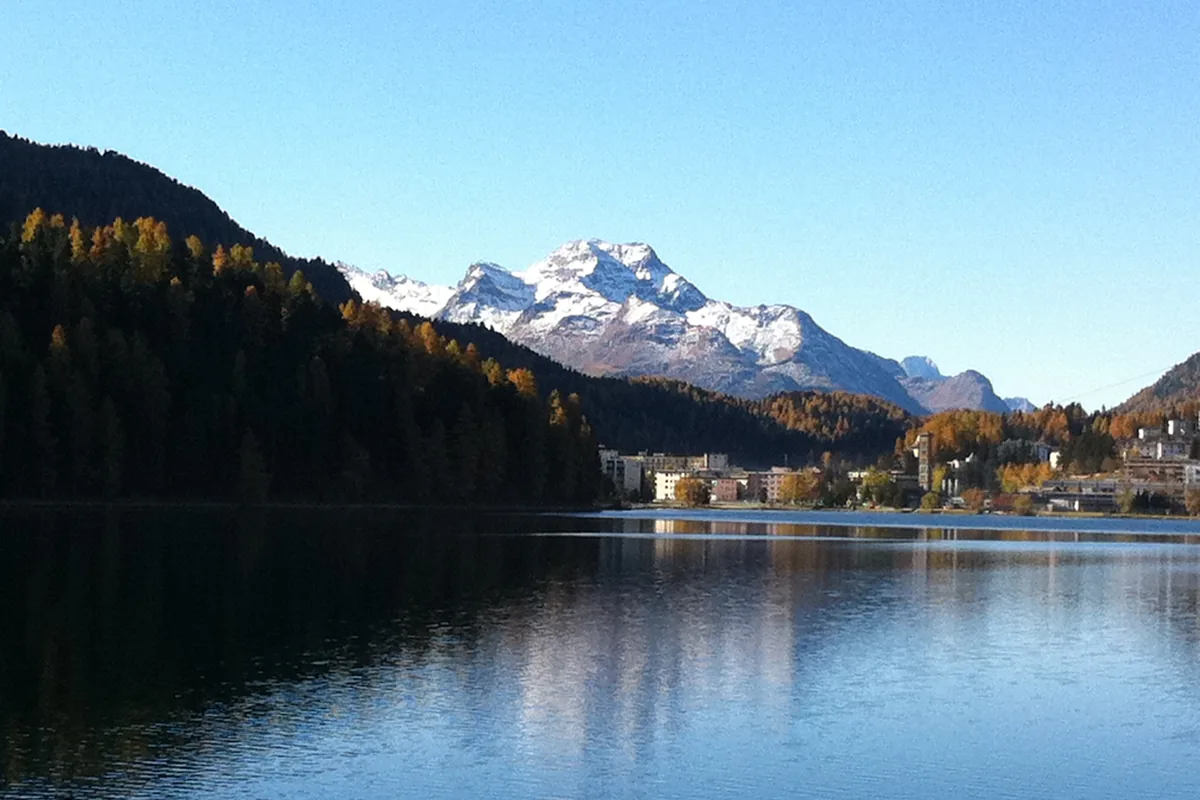
The Engadine resort at the line's northern end, on a lake at around 1,850 metres, is where alpine winter tourism was invented — on a hotelier's 1864 wager that summer guests would love the snow — and went on to host the Winter Olympics in 1928 and 1948. Glamorous, high and sunny, it's the day's turnaround point and its one real town.
Two countries, one square
The Italian rail town where the day's scenery begins, in the Valtellina wine valley. Its Italian and Swiss stations face each other across a single piazza — you walk from one country's railway to the other's — beside the Renaissance basilica of the Madonna di Tirano, built from 1505. The improbable meeting point of a Lombard valley and an Alpine railway.
A long day, told straight
The Bernina Express rewards the traveller who books it clear-eyed. Three things shape the day, and none is a dealbreaker if you plan for it.
It is a long transit day
From Milan the day runs roughly 12 to 13 hours, with a couple of hours of coach each way before and after the train. The scenery is the point, not leisure time — you'll spend far more of the day moving than stopping. Come for the ride and the windows; if you want lingering time in St Moritz or the mountains, this is better as part of a longer Alpine trip than as a single dash from Milan.
The seat reservation is mandatory
The branded panoramic Bernina Express runs on compulsory seat reservations, separate from any rail ticket or pass — a detail that catches out independent travellers every day. On a packaged Milan day trip the reservation is bundled into the price, which is much of the convenience: you turn up to a guaranteed panoramic seat rather than scrambling for one. If you go independently, reserve well ahead, especially in peak season.
You cross a border
The line runs from Italy into Switzerland, so carry a valid passport or ID — passports are checked, and there's a small Italian police office at the Tirano station. Switzerland is in the Schengen area but not the EU and not the eurozone: it uses the Swiss franc, so bring francs or a card for spending in St Moritz, where change comes in CHF even if euros are accepted.
Weather makes the views
The train runs in all weather, but low cloud or fog at the pass can hide the glaciers and Lago Bianco, and a clear day is dramatically better than a grey one. You can't control the mountain forecast, so choose a flexible booking, and if your dates allow, favour a settled-weather day. Winter and summer both deliver — but a socked-in pass in any season is the one real disappointment to guard against.
Bernina or Glacier Express?
Bernina Express vs Glacier Express
Bernina Express
- Route
- Chur / St Moritz ↔ Tirano (Italy)
- Journey
- ~4 hours full route
- The crossing
- Over the Bernina Pass into Italy, on adhesion — the high, glacier crossing
- For this day trip
- Yes — this is the one reachable from Milan via Tirano
Glacier Express
- Route
- Zermatt ↔ St Moritz
- Journey
- ~8 hours
- The crossing
- Across southern Switzerland, does not enter Italy
- For this day trip
- No — a separate train and route; they only meet near St Moritz
Reading the line
Getting the booking right
Two distinctions decide whether you end up on the ride you pictured. Both are easy to get right once you know them.
How the Milan day works
There's no direct scenic train from Milan itself — the day trip runs a coach up to Tirano and then rides the Bernina Express over the pass, sometimes reversing the legs. Travellers occasionally expect to board the famous red train in Milan; you don't. What the packaged day gives you is the transfer to the line, a reserved panoramic seat, and the border logistics handled, all in one booking.
Not just any train on the line
The same scenic track is served both by the reservation-only branded Bernina Express, with its panoramic roof windows, and by ordinary regional trains with opening windows and no reservation. The scenery is identical; the experience and price differ. Milan packages use the branded panoramic train or a reserved panoramic seat — worth knowing so you get the glass-roofed carriage you're picturing, not a standard commuter service.
Winter or summer?
The Bernina Express runs year-round, and the season utterly changes what you see. Neither is 'better' — they're different journeys.
Winter (Dec–Mar)
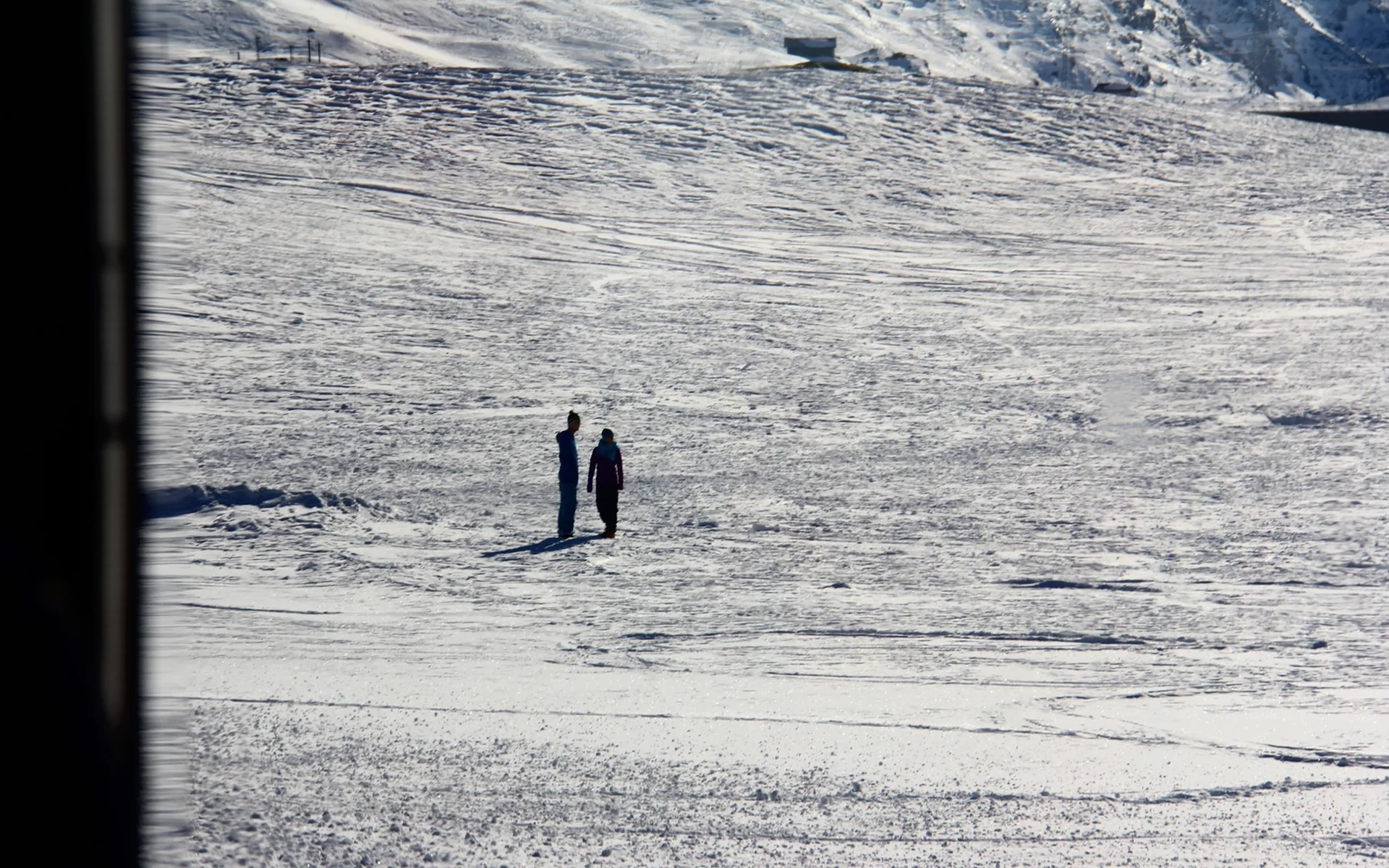
The postcard: a red train threading a white world, Lago Bianco and the pass under deep snow, the whole Engadine a fairy-tale of ice — and the small feat that the line stays open all winter at all. Days are short, so an early start matters, and snow can flatten the light; but for the classic 'red train in the snow' image, winter is the one. Dress for real cold at the pass.
Summer (Jun–Sep)
The other face of the line: glaciers at their most exposed and dramatic, Lago Bianco a vivid turquoise, alpine meadows in flower, green valleys and palm-lined Tirano. It's the busiest season, so reserve well ahead, and the longer daylight gives you more scenery for your day. For glaciers-and-green contrast and the fullest views, summer is the pick.
Autumn (Oct–Nov)
A quieter shoulder: golden larches on the slopes, thinner crowds and easier booking, with the glaciers still visible before the deep snow arrives. Weather grows less settled, but a clear autumn day pairs the drama of the high peaks with the calm of the off-season — a fine time for travellers who'd rather not share the panoramic car.
Spring (Apr–May)
The in-between season: melting snow high up, greening valleys below, and the fewest crowds of the year. Views can be mixed as the pass shakes off winter, and some settled-weather luck helps, but prices and demand are lower and the contrast between the still-white heights and the waking valleys is its own reward. A quiet, changeable, underrated time to ride.
The Bernina line, in pictures
The red train, the Brusio spiral, the glacier pass and the descent to the valleys.
Planning your day
Planning your day
Accept the length, then enjoy it
Go in knowing this is a 12-to-13-hour day with real transit at each end, and the day becomes a pleasure rather than a surprise. Eat before the early start, bring snacks and water, and treat the coach legs as part of the journey. The reward for the long day is a stretch of the Alps you simply can't see any other way — settle in and let the windows do the work.
Carry a passport and Swiss francs
You cross from Italy into Switzerland, so bring a valid passport or ID — it's checked at the border. Switzerland isn't in the eurozone, so carry Swiss francs or a card for anything you buy in St Moritz; euros are sometimes accepted but change comes in francs. A little cash in CHF saves hassle for a coffee or lunch at altitude.
Confirm the reservation and the train
On a packaged day the panoramic seat reservation is included, but check the listing to confirm you're on the branded Bernina Express or a reserved panoramic seat rather than a regional service. Reservations are mandatory on the branded train and sell out in peak periods, so book ahead — the whole convenience of the package is that this is handled for you.
Dress for the pass, whatever the season
It can be warm in Tirano and cold at 2,253 metres on the same afternoon, so bring layers and something warm even in summer — the pass and any photo stops are properly alpine. In winter, dress for real cold. Good footwear helps for the St Moritz free time, and sunglasses are worth having: high-altitude snow and glare are intense.
Chase a clear-weather day
The single biggest variable is the mountain weather, which can hide the glaciers and Lago Bianco behind cloud. You can't book sunshine, but you can book flexibly: choose a tour with free cancellation, keep an eye on the Engadine forecast, and if you have any choice of dates, favour a settled one. A clear day on the Bernina line is worth arranging your plans around.
Bernina Express day trips
Find a Bernina Express day for your dates
Every tour below is bookable through GetYourGuide, with live availability and the final price shown in your own currency before you pay — the packaged days bundle the coach to Tirano, the panoramic-train reservation and the border logistics into one booking.
Planning a Bernina Express day
The Bernina Express from Milan: What to Expect
A 12-hour day, mapped in full — the early start, the coach to Tirano, the climb over the pass and the time in St Moritz.
Read more →WHICH TRAINBernina Express vs Glacier Express: Which Is Which?
Two famous Swiss panoramic trains, constantly confused — the routes, the differences, and which one the Milan day trip rides.
Read more →THE BOOKINGBernina Express Reservations and Tickets, Explained
Why the seat reservation is mandatory and separate, what a packaged day includes, and how to avoid the classic mistakes.
Read more →WHEN TO GOThe Best Time to Ride the Bernina Express
Snow-globe winter, glaciers-and-green summer, golden autumn or quiet spring — the four seasons on the line, compared.
Read more →THE ENGINEERINGHow the Bernina Line Climbs the Alps
The adhesion railway, the Brusio spiral, the 7% gradients and the UNESCO listing — the engineering behind the ride.
Read more →Questions
Bernina Express questions
How long is the Bernina Express day trip from Milan?
About 12 to 13 hours door to door — an early start around 7 a.m., a couple of hours of coach up to Tirano, the panoramic train over the Bernina Pass to St Moritz, free time, and the return. It's a genuinely long day where the scenery, not leisure time, is the point; you spend much of it moving. If you want more time in the mountains, it's better as part of a longer Alpine trip.
Do I need a passport, and what currency in St Moritz?
Yes — the route crosses from Italy into Switzerland and passports are checked, so bring a valid passport or ID. Switzerland is in the Schengen area but not the EU and not the eurozone: it uses the Swiss franc. Bring francs or a card for anything you buy in St Moritz — euros are sometimes accepted, but you'll get change in Swiss francs.
Is the seat reservation included, or extra?
On the branded panoramic Bernina Express the seat reservation is mandatory and separate from any rail ticket or pass — a detail that catches out independent travellers. On a packaged Milan day trip it's normally bundled into the price, so you turn up to a guaranteed panoramic seat. If you travel independently, reserve well ahead, especially in peak summer and over the winter holidays.
Is the Bernina Express the same as the Glacier Express?
No — they're different trains and routes on the same Rhaetian Railway network. The Bernina Express runs Chur or St Moritz to Tirano in Italy, about four hours, crossing the high Bernina Pass on adhesion; the Glacier Express runs Zermatt to St Moritz, about eight hours, and does not enter Italy. They meet near St Moritz, which is why people combine them, but only the Bernina Express is the one reachable from Milan via Tirano.
When is the best time to go — winter or summer?
Both are spectacular and it runs year-round. Winter gives you the classic red-train-in-snow scene, deep snow at the pass and a fairy-tale Engadine, with short days. Summer gives you exposed glaciers, turquoise Lago Bianco, green valleys and long daylight, but the biggest crowds — book ahead. Autumn brings golden larches and calm; spring is quiet and changeable. Choose winter for snow, summer for glaciers and green.
Will bad weather ruin the trip?
The train runs in all weather, but low cloud or fog at the pass can hide the glaciers and Lago Bianco, and a clear day is far better than a grey one. You can't control the mountain forecast, so book a tour with free cancellation, watch the Engadine weather, and favour a settled-looking day if your dates allow. A socked-in pass is the one real disappointment to plan against.